
Best AI Image Generator for Anime Fan Art & Doujinshi (2026 Guide)
A practical 2026 guide to AI image generators for anime fan art and doujinshi-style illustrations—when to use Midjourney, GPT Image 2, Nano Banana, and the bikabika AI Anime Generator, plus cover art, badge, and compliance tips.
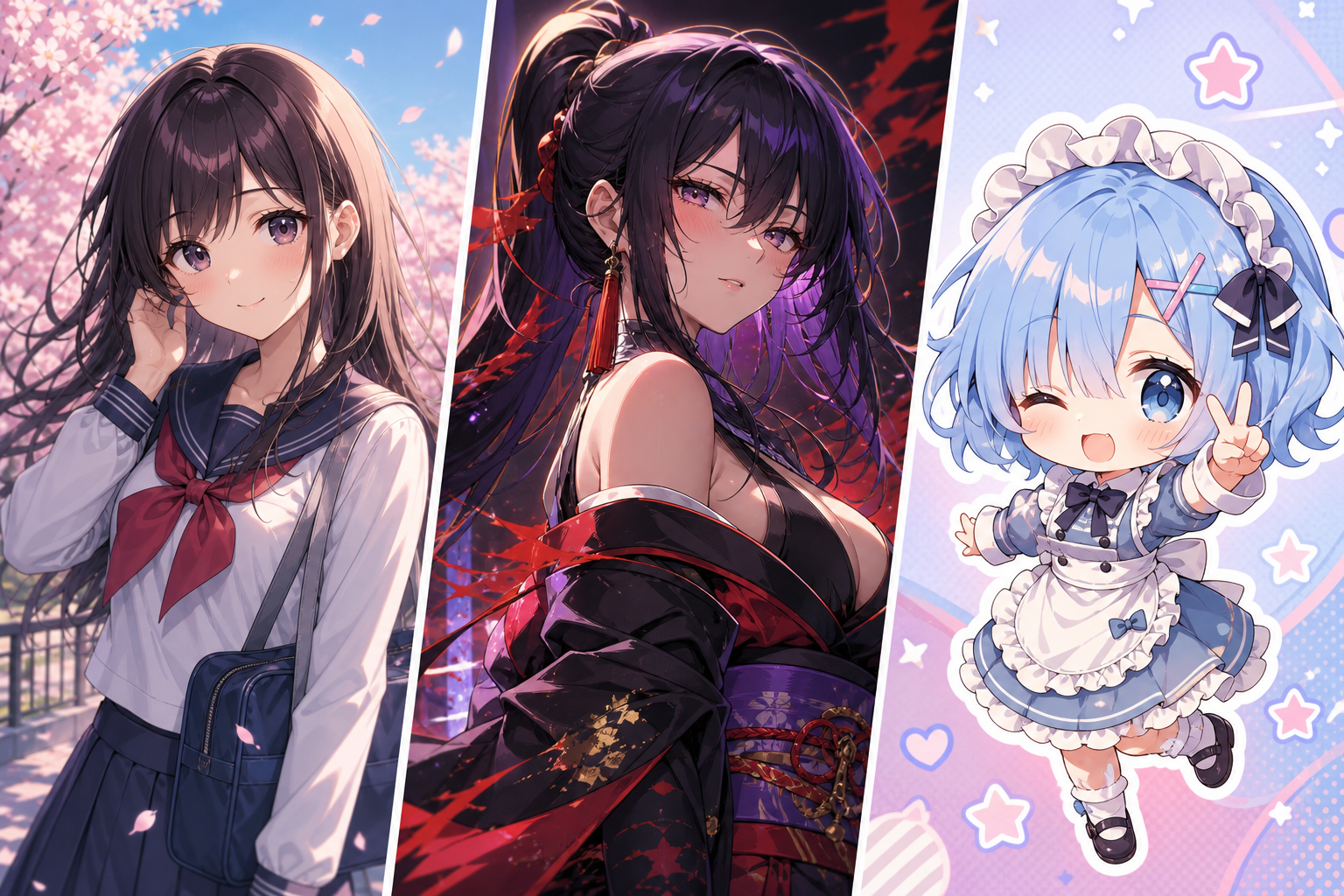
Google “best AI image generator for anime fan art” and you’ll get a ranked list with one crowned winner. Then you sit down to ship a convention badge, a doujinshi cover, or a single emotional tribute piece—and realize those jobs share almost nothing except “anime-looking.”
Fan art and doujinshi work is deadline-driven and format-specific. A circular badge needs a readable face at 80 pixels. A zine cover needs title space and poster energy. An interior page needs narrative framing and a character who still looks like your OC on page twelve. In 2026, the practical move is to match the fan-art task card to the right generator, then run one prompt skeleton and change only one variable per round.
This guide is for anime fan art & doujinshi-style illustration—not headshots, not product photography. You’ll see where Midjourney, GPT Image 2, Nano Banana, and the on-site AI Anime Generator each earn their place, and when the AI Character Generator should lock identity before you polish a single frame.
What “best for fan art & doujinshi” actually means
Rankings are bookmarks. Shipping fan work still comes down to five checks:
- Still reads as fan art, not fake photo — cel shading, soft anime paint, chibi badge proportions; skin shouldn’t drift photoreal.
- Survives the format you need — badge crop, cover zoom, or interior panel close-up; hair color, eye shape, and costume silhouette must hold.
- Series tone stays locked — a doujinshi spread can’t swap studio DNA every page.
- Constraints survive round two — half-body crop, negative space for titles, hard refusals like
no photoreal skinshouldn’t vanish on the next pull. - Screening stays fast — con deadlines mean shortlists with reject notes, not an afternoon of lottery pulls.
One stunning cover frame that collapses when you ask for a new pose is atmosphere roulette—not a fan-art pipeline.
2026 cheat sheet: fan art & doujinshi
| Generator / entry | Fan-art sweet spot | Watch-outs | Use when |
|---|---|---|---|
| Midjourney | Doujinshi cover energy, emotional key visuals, con poster mood | Identity marks can drift with bold style | You need cover-grade shortlists first |
| GPT Image 2 | Checklist briefs, badge-safe crops, short title slots | Magazine polish can trail Midjourney | Constraints and refusals must hold across rounds |
| Nano Banana family | Fast color trials, hair/outfit variants, expression drafts | Better as shortlist engine than sole final | Volume before polish |
| On-site AI Anime Generator | Anime-first workflow + multi-model access | You still write OC identity clearly | Daily fan-art output without site-hopping |
| AI Character Generator | Cross-page OC identity lock | Not a style-shopping mall | Series doujin must stay the same person |
1. Midjourney: doujinshi covers and emotional fan-art key visuals
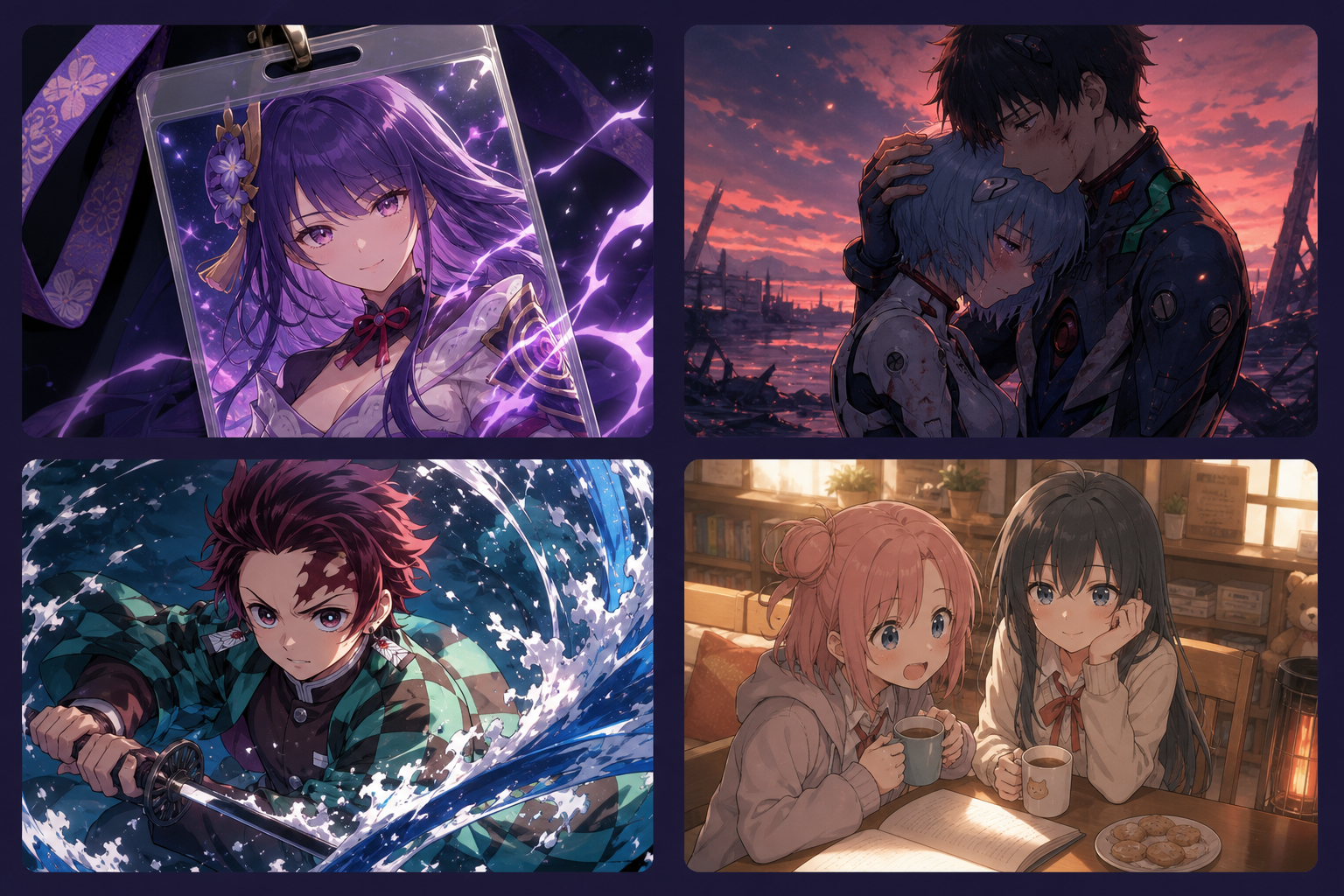
When the brief sounds like “this needs to look like it belongs on a doujinshi table”—rim light, neon night streets, editorial stance, tears that read at thumbnail size—Midjourney is still where many fan artists start. V8.2 defaults bolder; name light, medium, and framing clearly and you’ll usually beat empty anime masterpiece spam for a usable shortlist.
Best for:
- Zine covers, song tribute art, con promo key visuals
- Emotional scenes where mood and character presence share top billing
- Art-direction pulls before you nail hair, eyes, and costume notes
Think twice when:
- Long readable copy must sit cleanly on the cover
- Panel gutters and layout boxes must land on round one
Habit: one style lane only (soft cel shading or painterly anime illustration). Three studio names in one prompt usually means mush. For Midjourney-specific tactics, see the Midjourney V8.2 prompt guide.
2. GPT Image 2: when the fan-art brief is a checklist
When the job becomes items—half-body, silver hair, gradient background, badge readable at small size, no photoreal skin—GPT Image 2 often wins. Hard refusals and short headline slots usually cost fewer retries than pure Midjourney atmosphere.
Best for:
- Wardrobe and “must not appear” lists across many rounds
- Con posters with a short embedded title
- Tightening a Midjourney mood frame into a deliverable fan-art brief
Habit: identity first, then crop/style, then delivery constraints. Deeper patterns: GPT Image 2 prompt guide.
3. Nano Banana: run fan-art draft volume first
Before you commit to a final cover or badge, you usually need options: hair length, jacket color, chibi vs standard proportion, three expression directions. Nano Banana shines when drafts arrive fast and near-detail checks—hair strands, pin badges, eye highlights—happen early.
Best for: Silhouette and color shortlists; badge face trials; budget-friendly batch runs before a con print deadline.
Habit: find the winning skeleton here, then promote to Midjourney or GPT Image 2 for finals.
4. AI Anime Generator: the daily lane for fan art & doujinshi
If most of your week is fan art and doujin-style illustration, fighting a photo-first toolbox wastes time. The AI Anime Generator keeps character sheets, cover art, expression sets, and style switches in one anime-first lane—and lets you compare Midjourney and GPT Image 2 directions on bikabika AI without bookmark hopping.
Best for: OC showcase pages, con badge batches, doujinshi interior drafts, and side-by-side model comparisons in a single session.
5. AI Character Generator: when your OC can’t swap faces
Style browsing won’t fix “same OC, new pose, new face.” When a doujinshi series or multi-page fan comic needs one identity across pages, lock hair, eyes, and costume marks in the AI Character Generator first—then polish 2D finish in the anime lane.
Best for: OC expression sheets, CP pair consistency (when both are original characters), and any fan work where page three must match page one.
Three fan-art task types (and where each tool wins)
A. Convention badge / avatar fan art
- Goal: Circular or square crop safety, readable expression, hair and eye color recognizable at small size.
- Model lean: GPT Image 2 or Nano Banana to lock the face; optional Midjourney pass for atmosphere polish.
- Prompt notes:
safe crop for circular avatar,clean cel shading,no photoreal skin,simple background.
B. Doujinshi cover / emotional key visual
- Goal: Strong light, negative space for title text, character presence over busy background.
- Model lean: Midjourney shortlist → GPT Image 2 to tighten constraints and title space.
- Prompt notes: one main style word + one light direction; avoid stacking three studio references in a single prompt.
C. Doujinshi interior / single-panel illustration
- Goal: Line hierarchy, composition that serves the scene, series tone that matches the cover.
- Model lean: AI Character Generator for identity lock, then GPT Image 2 for framing control.
- Prompt notes: specify shot type (half-body / knees-up / full body) and emotion in one sentence; don’t cram every prop into round one.
A reusable prompt skeleton (fan art / doujinshi)
Most rounds follow this order:
[OC identity: age feel, hair color, eye color, costume memory marks]
+ [pose / expression / emotion in one line]
+ [one style lane: soft cel shading OR painterly anime illustration]
+ [light + background in one line]
+ [delivery: half-body, clean gradient background, space for title on top]
+ [hard refusals: no photoreal skin, no extra fingers, no watermark]
Rule: change one layer per round. Lock the face first, then light, then wardrobe. Keep style and photography terms in English for model stability.
Example · Emotional doujinshi cover (Midjourney-leaning mood)
Half-body anime fan art of an original character with rose-pink short hair and amber eyes, wistful expression, soft cel shading, gentle rim light, clean gradient background with negative space at top for title, doujinshi cover mood, high clarity —no photoreal skin, 3d render, extra fingers, watermark
Example · Con badge portrait
Chibi-style anime fan art portrait, cheerful smile, teal twin tails, clean cel shading, simple pastel background, safe circular crop composition, badge-ready clarity —no photoreal skin, cluttered background, watermark
Compliance and creative boundaries (read this)
Fan art culture runs on passion—but IP and platform rules still apply.
- Prioritize original OCs and your own settings to reduce IP disputes and takedown risk.
- If you’re paying tribute to existing work, avoid putting recognizable logos, trademarks, or protected character names directly into prompts. Check local laws and event rules before printing for a convention table.
- AI assistance doesn’t replace attribution, licensing, or model terms of service. Confirm commercial and print rights before selling physical doujinshi or badge sets.
When in doubt, treat AI output as a drafting and exploration tool for original fan-world work—not a shortcut around someone else’s copyright.
One-minute picker (2026)
- Is delivery fan art / doujinshi-first? → AI Anime Generator
- Do constraints matter more than atmosphere? → GPT Image 2
- Need cover energy first? → Midjourney shortlist, then tighten with GPT Image 2
- Series must stay one person? → AI Character Generator
Non-anime portrait work: AI Headshot Generator. General multi-model comparison: AI Image Generator.
Quick reference table
| Task | Recommended entry |
|---|---|
| Doujinshi cover, emotional fan art | AI Anime Generator + Midjourney |
| Con badge / avatar fan art | GPT Image 2 or Nano Banana |
| OC consistency across pages | AI Character Generator |
| Multi-model side-by-side trials | AI Image Generator |
Next step
Open the AI Anime Generator and run one comparison round today: copy the skeleton above → change one layer → log winners and rejects. Lock identity for series work; go bold with Midjourney when the job is cover energy and emotional fan-art presence. You can also start generating online when you want a quick multi-model bake-off.
For deeper model tactics, continue with the Midjourney V8.2 prompt guide and the GPT Image 2 prompt guide.
Related anime guides
- Best AI anime generators 2026 — field guide for anime characters
- Create 2D anime with the AI Anime Generator — anime-first practice loop
- Anime art & manga illustrations — published 2D frames
- Studio Ghibli style — soft pastoral mood