
Best AI Art Generator in 2026: A Multi-Model Workflow That Actually Ships
Looking for the best AI art generator in 2026? Skip single-model rankings. Build a multi-model workflow across Midjourney, GPT Image 2, Nano Banana, and on-site tools so ideas become publish-ready art faster.
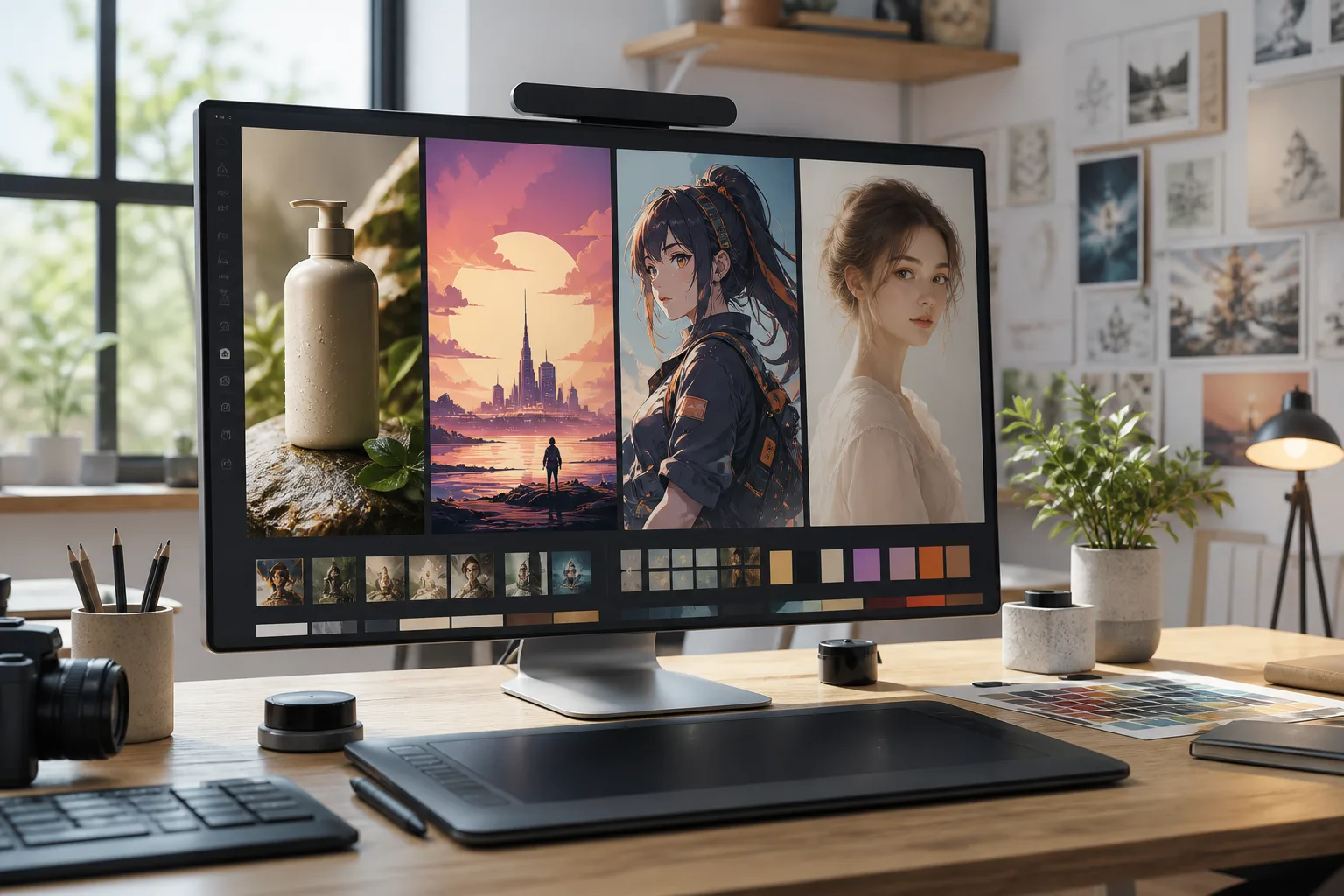
Search “best AI art generator 2026” and you will get crowns: one model, one scoreboard, one winner. That format is useful for hype cycles. It is weak for shipping.
If your week mixes campaign covers, product stills, anime sheets, and profile portraits, the “best” tool is not a single engine. It is a multi-model workflow—a repeatable path from brief → compare → shortlist → finish—so each deliverable uses the model and entry point that fit.
This guide is the hub article for that approach on bikabika AI: how to define “best,” how to route jobs into the right tool, how to run a weekly multi-model loop, and where to go next for Midjourney / GPT Image 2 / Nano Banana deep dives.
What “best AI art generator” should mean in 2026
Ignore leaderboard screenshots for a moment. For working creators, “best” usually means five practical wins:
- Publishable crops — the frame survives the real destination (1:1 avatar, 16:9 cover, product hero)
- Instruction stickiness — backdrop, wardrobe, and negatives survive a second pass
- Style control — photoreal, poster energy, or anime stays in lane
- Retry economics — you reach a shortlist without burning the afternoon
- Low switching tax — you can compare models without re-learning three UIs every week
A generator that wins one beautiful first roll and collapses on pose changes, text, or team consistency is a mood toy—not your production system.
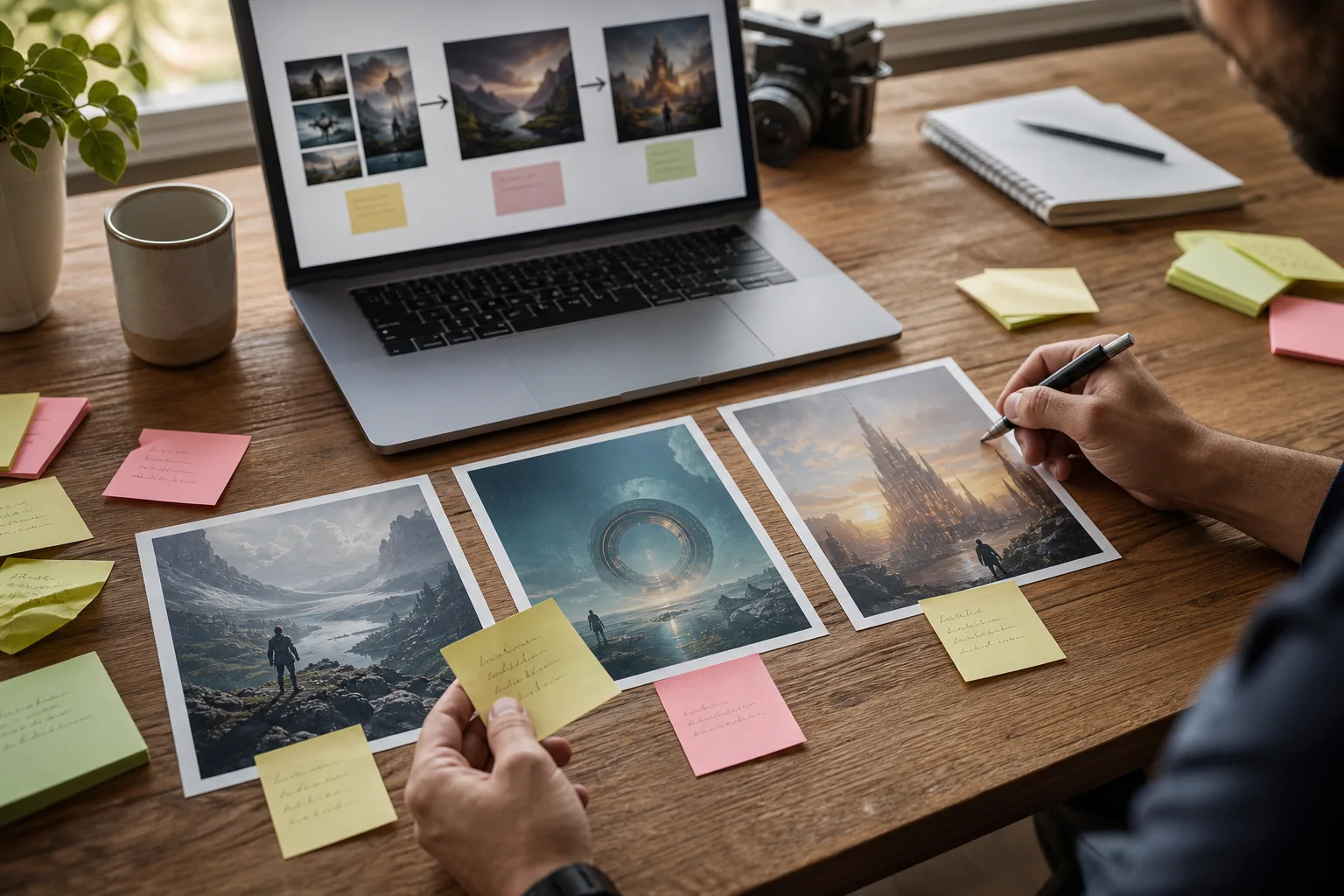
Why single-model loyalty quietly slows you down
Staying loyal to one “best AI art generator” feels efficient until production hits:
- Style lock-in — gorgeous outputs that fail clean commercial backdrops or strict copy rules
- Wrong box for the job — forcing LinkedIn headshots or anime sheets through a generic art prompt
- Comparison friction — every official site means new logins, new history, messy notes
- No compounding — screenshots without reject reasons teach nothing next week
Multi-model is not “open every model forever.” It means pair the task with the right first lane, keep one prompt skeleton, and only switch when shortlisting proves you wrong.
For model-by-model fit, continue with Midjourney vs GPT Image 2 vs Nano Banana and How to choose AI image models in 2026.
The hub map: tools first, then models
On bikabika AI, start with the job, then the model:
| Deliverable | Better first entry | Why |
|---|---|---|
| General AI art, posters, product/scenes | AI Image Generator | Multi-model text-to-image hub |
| LinkedIn / resume / team portraits | AI Headshot Generator | Crop and professional constraints |
| OC consistency across poses | AI Character Generator | Identity lock before polish |
| Anime / manga / fan-art finish | AI Anime Generator | Anime-first lane, less photoreal drift |
| Fast online compare | Start generating online | Workspace for side-by-side trials |
Models still matter—but entry mismatch wastes more generations than “wrong brand loyalty.”
Model lanes inside the hub (short version)
Use this as a routing sticky note—not a forever ranking:
| Need | Lean first | Deep dive |
|---|---|---|
| Atmosphere, stylized covers | Midjourney | Midjourney V8 page · V8.2 prompt guide |
| Constraints, in-image text, commercial stills | GPT Image 2 | GPT Image 2 page · prompt guide · what is GPT Image 2 |
| Speed / cheap draft volume | Nano Banana Lite | Nano Banana page · Lite prompt guide · what is Lite |
Full comparison table and bake-off checks live in the Midjourney vs GPT Image 2 vs Nano Banana guide.
A weekly multi-model workflow (the part rankings skip)
Copy this loop. It compounds.
1. Write a three-line brief
- Use case — social cover, product hero, anime sheet, resume portrait, pure exploration?
- Constraints — must match a person / brand palette / cel shading / seamless backdrop?
- Acceptance — e.g. “at least one of four candidates crops cleanly to 1:1”
2. Build one prompt skeleton
Keep layers stable so learning transfers across models:
- Subject
- Appearance markers
- Scene + light
- Style lane (one lane only)
- Camera / crop / delivery notes
- Short negatives
Example:
Half-body portrait of a young woman, wet hair slicked back, natural freckles and visible pores, soft daylight from front-left, off-white wall, face slightly right of center, 85mm, f/2.0, no beauty blur, no plastic skin
More copy-ready lines: 10 best AI image prompts 2026 and 50 best GPT Image 2 prompts.
3. Enter by job, then compare models
Open the matching tool above—or the AI Image Generator / workspace for general art—and run the same skeleton in two lanes (for example Midjourney + GPT Image 2, or Lite + GPT Image 2).
4. Shortlist with reject notes
Keep winners and why the others lost (crop fail, plastic skin, text break, style drift). Screenshots without notes are entertainment.
5. Change one layer per retry
Light or crop or wardrobe—not all three. That is how a multi-model workflow becomes skill instead of lottery.
6. Finish in the right vertical tool
Profile crops → headshot. Series identity → character. 2D anime finish → anime generator. General art stays in the image hub.
“Best AI art generator” scenarios (practical picks)
Campaign cover / mood poster
Start Midjourney for energy; verify crop and any short text in GPT Image 2 if the layout is commercial. Hub: AI Image Generator.
Product / ecommerce visual
Prefer GPT Image 2 for constraints; use Nano Banana Lite for cheap composition tests first. Hub: image generator; polish path can include background remover / photo enhancer tools when shipping photos.
Anime character art
Do not judge “best AI art generator” rankings built for photoreal. Start in the AI Anime Generator, then compare Midjourney / GPT Image 2 inside that lane. See the best AI anime generators 2026 cluster.
Professional portrait
Skip general art boxes when the deliverable is LinkedIn or resume. Use the AI Headshot Generator.
Common mistakes when hunting the “best” generator
- Crowning a forever winner after one pretty first roll
- Ignoring the entry tool (headshot / anime / character) and blaming the model
- Changing everything every retry so you learn nothing across models
- Treating draft engines as 4K finals (especially Lite-class tools)
- No reject notes—only another bookmark folder of almost-winners
FAQ
Is there a single best AI art generator in 2026?
For a specific job, sometimes one model clearly wins. For a creative week with mixed deliverables, the “best” system is a multi-model hub with clear routing—not a permanent champion.
Midjourney or GPT Image 2 for AI art?
Mood-first art often favors Midjourney; instruction-heavy commercial art often favors GPT Image 2. Compare on your brief—see the full comparison.
Can I run this workflow online without hopping official sites?
Yes. Use the AI Image Generator or start generating online on bikabika AI to keep trials, notes, and model switches in one place.
Where should beginners start?
Write the three-line brief, open the image hub, run one skeleton in two models, and keep reject notes. Prompt craft improves faster with a shortlist habit than with another “best of” list.
Next step
Pick one real deliverable today. Route it to the correct tool, run two model lanes on the same skeleton, and save the winner plus reject reasons.
When you are ready, open the AI Image Generator—or start generating online—and turn that brief into a publishable shortlist instead of another ranking debate.