
Seedance vs Kling vs Veo (2026 AI Video Comparison)
A practical 2026 comparison of Seedance 2.0, Kling 3.0 Omni, and Veo 3.1—when each wins for camera work, multi-shot storytelling, and cinematic shorts, plus a reusable AI video bake-off workflow on bikabika AI.
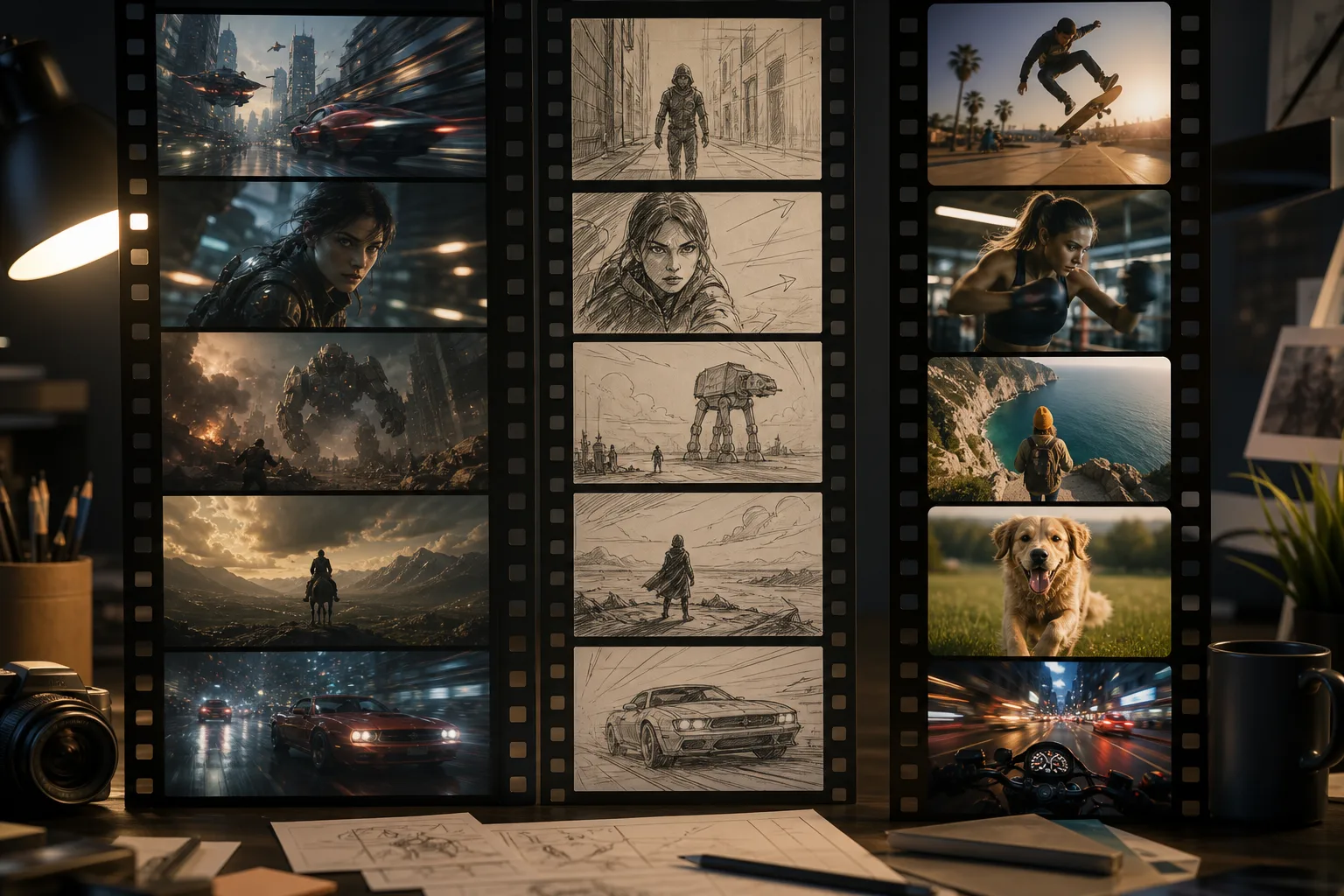
Search “best AI video generator 2026” and you will usually get one crown. That framing collapses the moment you ship real clips. A product demo with synced SFX, a three-shot storyboard with one consistent character, and a cinematic vertical hook are different jobs—and they reward different engines.
In 2026, the practical question is not “which model is forever #1?” It is: when should you lean Seedance 2.0, when Kling 3.0 Omni, and when Veo 3.1—and how do you compare them without burning an afternoon of blind regenerations?
This guide is a comparison hub for Seedance vs Kling vs Veo on bikabika AI: one-sentence roles, acceptance checks, job-fit tables, a reusable bake-off workflow, and links into each model page.
The one-sentence roles (2026)
| Model | Best first job | Watch-out |
|---|---|---|
| Seedance 2.0 (ByteDance) | Multimodal reference, professional camera language, Standard/Fast pacing | Longer narrative arcs may still need shot splitting |
| Kling 3.0 Omni (Kuaishou) | Multi-shot storyboards, character/element consistency, native audio + lip sync | Treat “story film” briefs differently from single-take mood clips |
| Veo 3.1 (Google DeepMind) | Cinematic fidelity, complex camera, 1080P/4K and native vertical | Confirm platform duration/resolution limits for your channel |
None of these lines means the others are “bad.” It means start in the lane that matches the deliverable, then switch if shortlisting proves you wrong.
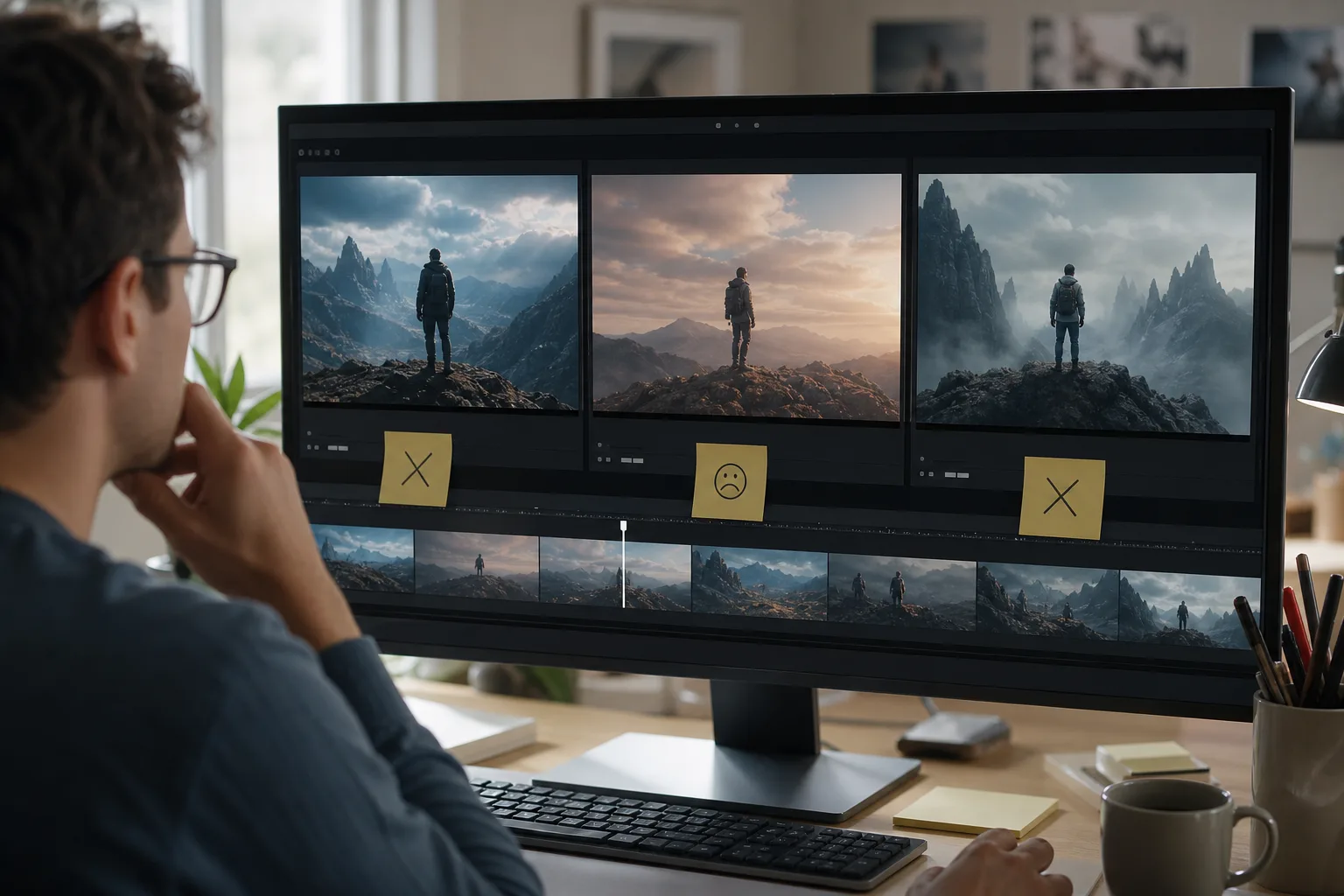
How to judge an AI video bake-off (not the hype)
Use the same five checks every round:
- Motion honesty — limbs, products, and camera moves stay readable (no melted morphs)
- Shot plan survival — if you asked for two cuts or a push-in, did the model keep structure?
- Identity / product lock — the same person or SKU across beats, not a cousin each second
- Audio fit (when enabled) — dialogue, SFX, or ambience sync without fighting the picture
- Retry cost — how many generations until you have a clip worth editing?
A model that wins “first-roll beauty” and loses “third-retry continuity” is a mood toy for that brief—not your production engine.
Seedance 2.0: when camera + multimodal reference matter
Choose Seedance when:
- You need text-to-video and image-to-video in one creative loop
- Multimodal references (images, clips, audio cues) should steer look and motion
- Professional camera language (dolly, pan, tilt, shot-size changes) is part of the brief
- You want Standard for quality vs Fast for iteration
Defer Seedance when:
- The job is a tightly scripted multi-shot character short and Kling’s storyboard mode is a better fit
- You specifically need Veo’s cinematic / 4K vertical delivery path for a brand film look
Deep dive: Seedance 2.0 model page.
Kling 3.0 Omni: when multi-shot story is the product
Choose Kling 3.0 Omni when:
- The deliverable is an “edited story film,” not one long take
- Character / element consistency across shots is non-negotiable
- Native synced audio + multilingual lip sync are part of the brief
- You need longer beats (commonly up to ~15 seconds) for hooks and storyboard validation
Defer Kling when:
- You only need a fast camera-mood exploration with heavy reference mixing (try Seedance Fast first)
- The brief is pure cinematic fidelity / 4K vertical brand film and Veo is the client’s lane
Deep dive: Kling 3.0 Omni model page.
Veo 3.1: when cinematic fidelity is the product
Choose Veo 3.1 when:
- Picture quality, temporal consistency, and complex camera work are the selling point
- You need native synced SFX / ambience / dialogue with a cinematic look
- 1080P / 4K delivery or native 9:16 vertical matters for the channel
- Ingredients / reference-driven generation should lock style without losing polish
Defer Veo when:
- You need cheap, high-volume draft loops before any final exists (start elsewhere, then promote)
- Multi-shot storyboard control with character binding is the primary pain (Kling Omni often fits first)
Deep dive: Veo 3.1 model page.
Comparison table: Seedance vs Kling vs Veo
| Need | Prefer first | Second look |
|---|---|---|
| Multimodal reference + camera craft | Seedance 2.0 | Veo 3.1 |
| Multi-shot storyboard + character lock | Kling 3.0 Omni | Seedance 2.0 |
| Cinematic / 4K / vertical brand look | Veo 3.1 | Kling 3.0 Omni |
| Native synced audio-visual | All three (confirm per platform) | — |
| Fast concept iteration | Seedance Fast | Kling draft pass |
| Product demo short | Seedance or Veo | Kling if multi-shot story sells |
| Serialized character short | Kling 3.0 Omni | Seedance with strong refs |
Still deciding at the image layer before video? Pair with Midjourney vs GPT Image 2 vs Nano Banana for stills, then move winning frames into image-to-video.
A 25-minute AI video workflow (copy this)
- Write a three-line brief: use case (hook / demo / storyboard), aspect ratio (9:16 or 16:9), acceptance (“two clean cuts + readable product”).
- Write a shot plan: subject → action → camera → audio (on/off) → negatives.
- Open the matching model page on bikabika AI: Seedance, Kling 3.0 Omni, or Veo 3.1.
- Run the same brief in two lanes when unsure (e.g. Kling vs Seedance for story; Veo vs Seedance for fidelity).
- Shortlist with reject notes—motion fail, identity drift, audio clash, crop fail.
- Change one layer per retry (camera or action or audio)—not all three.
- Edit externally for longer finals: AI clips are beats; timelines finish the film.
Sample prompt skeleton (reuse across models)
Vertical 9:16 product demo, 6–8 seconds: matte black wireless headphones on a clean desk, slow push-in, soft daylight from the left, subtle hand enters frame to lift the cup of the earcup, shallow depth of field, commercial ecommerce feel, soft whoosh SFX synced to the push, no melted plastic edges, no floating fingers, no watermark
Rewrite tips by model:
- Seedance — add reference images for the SKU; use Fast to explore camera, Standard for keepers.
- Kling Omni — if you need story, split into shot 1 / shot 2 prompts; bind character or product refs early.
- Veo — emphasize cinematic light and camera path; confirm vertical / resolution targets for the channel.
Common mistakes in “vs” video comparisons
- Crowning a forever winner after one pretty first roll
- Comparing single-take mood to multi-shot story without matching the brief
- Changing subject, camera, and audio in the same retry
- Expecting one generation to replace an editor for 60-second finals
- No reject notes—only another folder of almost-usable clips
FAQ
Is Seedance better than Kling in 2026?
For multimodal reference and camera-craft loops, Seedance often feels first. For multi-shot storytelling with character lock, Kling 3.0 Omni often wins. Compare on your shot plan.
Is Veo always the highest quality?
Veo 3.1 is frequently the cinematic / high-fidelity pick, especially when vertical or 4K delivery matters. Quality without the right shot structure still fails a story brief—route by job.
Can I learn all three on bikabika AI?
Yes. Start from the model pages—Seedance 2.0, Kling 3.0 Omni, Veo 3.1—then jump into online creation from each guide.
Should I generate stills before video?
Often yes for product and character lock. Build frames with the AI Image Generator, then feed winners into image-to-video on your chosen model.
Next step
Pick one real clip today. Write a three-line brief and a mini shot plan, then run two model lanes.
Open Seedance 2.0, Kling 3.0 Omni, or Veo 3.1 and turn that brief into comparable candidates—with reject notes—before you crown a winner.